
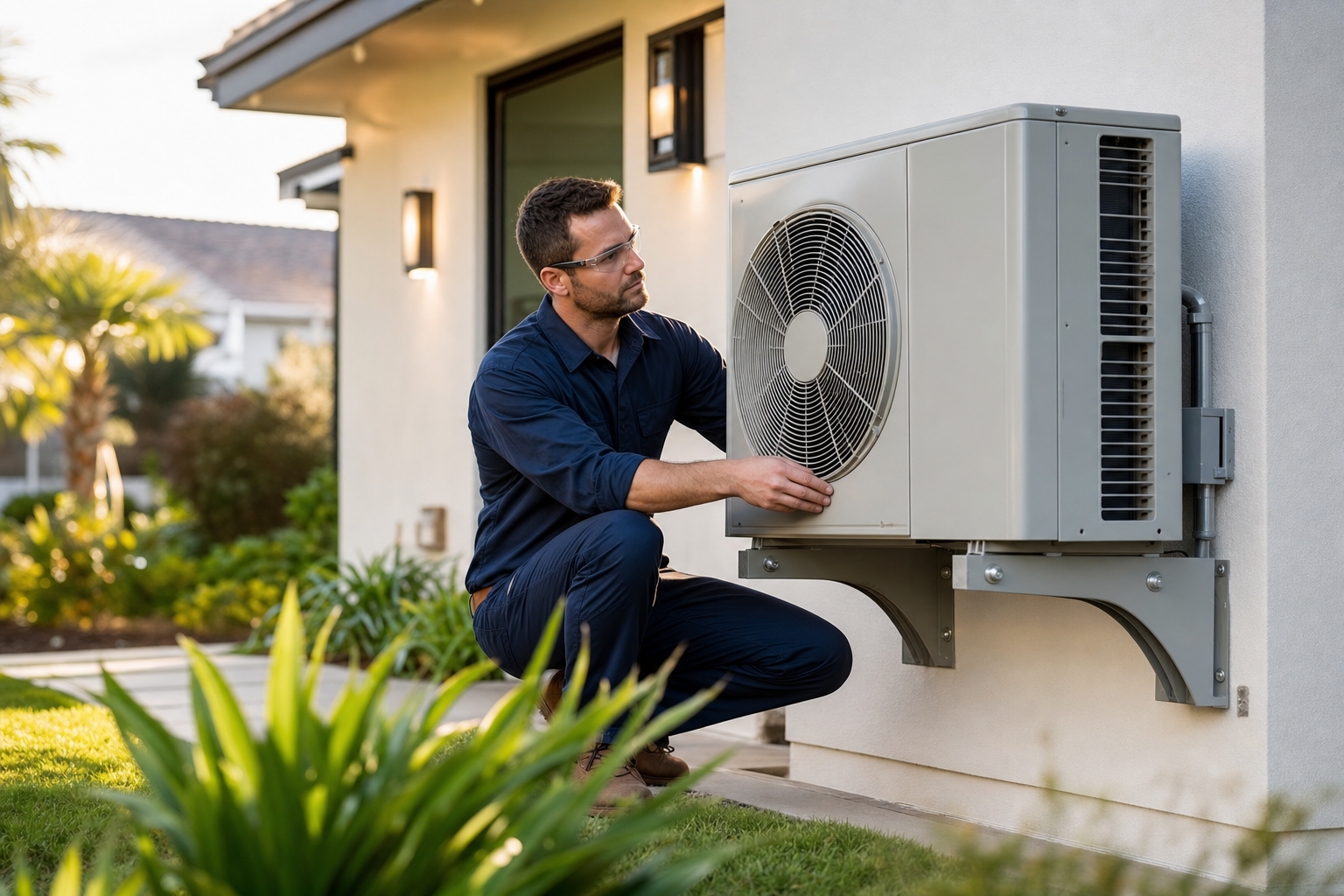
A homeowner in Phoenix opens ChatGPT and types: “Who’s the best HVAC company near me?” ChatGPT gives a name. It’s not yours.
That’s not a hypothetical. It’s happening right now, in every market across the country, while most contractors are still focused on Google rankings and Angi lead costs.
According to the 5W PR AI Visibility Index 2026, 87% of HVAC and plumbing contractors are completely invisible in AI search. They don’t appear when homeowners ask ChatGPT for a plumber recommendation. They’re absent from Google AI Overviews when someone searches “best roofer in my city.” They don’t get cited by Perplexity when a homeowner is comparing electrical contractors.
That gap is called the AI citation gap. And closing it is what generative engine optimization (GEO) is for.
This guide breaks down everything you need to know: what GEO actually is, how it works differently for each trade, how long it takes, and exactly what to do in the first 90 days.
Key Takeaways
- In 2026, 87% of HVAC and plumbing contractors are invisible in AI search (5W PR AI Visibility Index 2026)
- 45% of consumers now use AI to find local services – up from just 6% one year ago (MarketingCode, May 2026)
- AI-referred leads close at 73% vs. 31% for Google organic, based on Green Owl Systems client tracking
- GEO takes 4-6 months to build – the contractors who start now will own the AI citation space before competitors realize it matters
What Is GEO (Generative Engine Optimization)?
In 2026, 45% of consumers use AI assistants to find local services – up from just 6% twelve months ago, according to MarketingCode’s May 2026 consumer behavior report. GEO is the practice of making your contracting business the source those AI systems cite when homeowners ask for a recommendation. Unlike SEO, which earns you a ranked position in a list of blue links, GEO earns you a mention by name inside an AI-generated answer.
Think about the difference from a homeowner’s perspective. With traditional search, they see ten links and choose one. With AI search, they read: “For HVAC repair in [city], [Company Name] has strong reviews and specializes in residential systems.” One recommendation. Yours – or a competitor’s.
What does a GEO citation actually look like? When a homeowner asks ChatGPT “who’s a good plumber in [city],” the AI pulls from indexed web content, review platforms, directories, and third-party mentions to build its answer. It cites businesses that have clear entity signals (a consistent, well-defined online presence), strong third-party validation (reviews, directory listings, press mentions), and structured content that AI systems can extract and verify.
That’s it. Not the biggest ad budget. Not the highest Google ranking – though that helps. The business with the clearest, best-documented digital identity wins the AI recommendation.
GEO matters for every home service trade. HVAC, plumbing, roofing, electrical – homeowners don’t just use AI for research anymore. They use it to make decisions. The contractor who gets recommended first gets the call.

For a direct comparison of how GEO differs from traditional SEO, see our GEO vs. SEO breakdown for contractors.
Citation capsule: In 2026, 45% of consumers use AI assistants to find local services, up from 6% just twelve months earlier (MarketingCode, May 2026). GEO – generative engine optimization – is the practice of making your contracting business the cited source in those AI-generated answers, earning a recommendation by name rather than a ranked link in a search result list.
Why AI Search Is Changing How Homeowners Find Contractors
This isn’t a future shift. It’s happening right now.
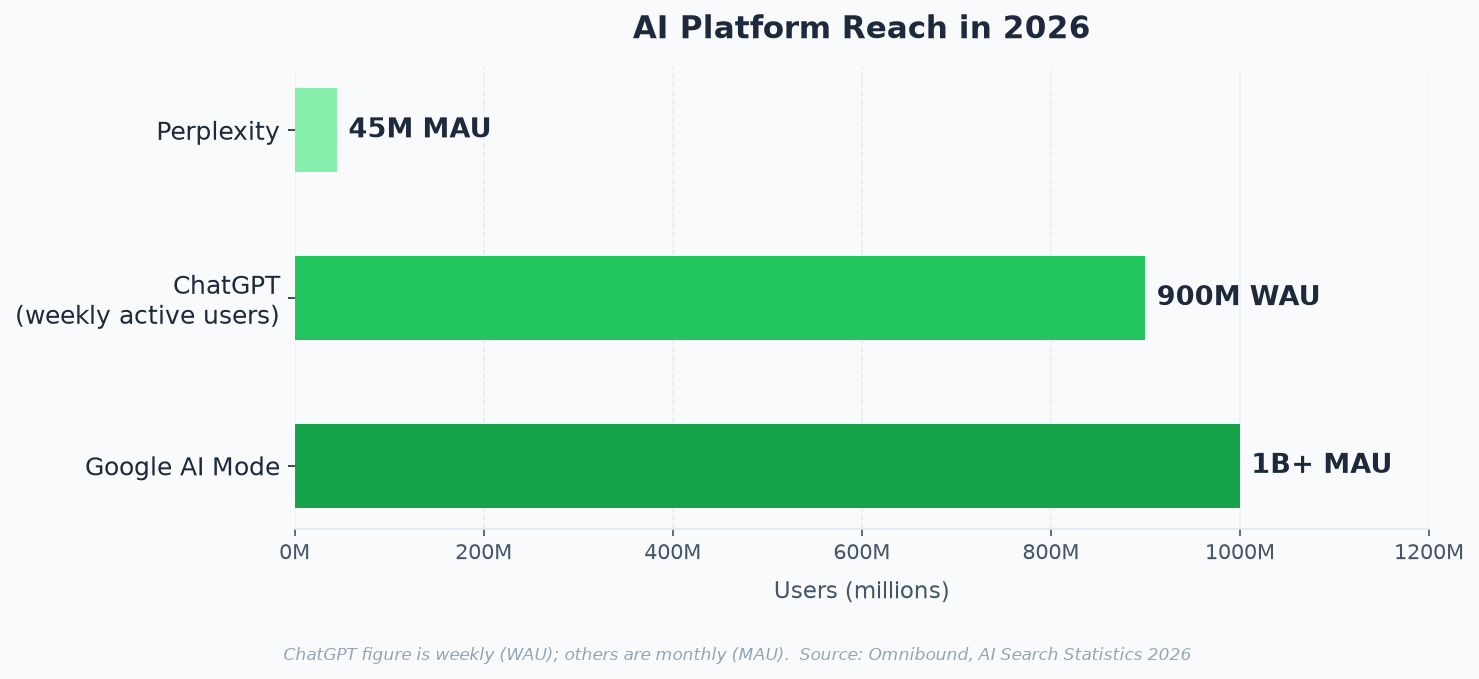
In February 2026, ChatGPT reported 900 million weekly active users, according to Omnibound’s AI Search Statistics report. Google AI Overviews now appear in 25.11% of all Google searches – up from 13.14% in March 2025. Gartner projects a 25% drop in traditional search volume due to AI chatbots and virtual agents by 2026. That’s not a marginal trend. That’s a structural change in how people find local businesses.
For home service contractors specifically, this shift is already visible in the numbers. One in three homeowners under 45 used AI to find a home service provider in the last 90 days (MarketingCode, May 2026). Think about your customer base. How many of your recent calls came from someone under 45? Those homeowners are asking AI first.
Here’s what makes this complicated for contractors: the three major AI platforms don’t share citation sources. ChatGPT, Google AI Overviews, and Perplexity each pull from distinct citation pools, with only 12% overlap between platforms (MarketingCode, May 2026). A contractor who appears in Google AI Overviews might be completely absent from ChatGPT – even if they rank well organically. You’re not optimizing for one search engine. You’re optimizing for three separate recommendation systems.
What’s happening to traditional search in the meantime? Ahrefs documented a position-one CTR drop from 7.3% to 2.6% when AI Overviews are present in the search result. The click doesn’t happen because the homeowner already got their answer from AI. Either your business was the answer – or it wasn’t.
See how GEO compares with other contractor marketing channels on our Compare page.
Citation capsule: As of February 2026, ChatGPT has 900 million weekly active users, Google AI Overviews appear in 25% of all searches, and Gartner projects a 25% drop in traditional search volume due to AI assistants (Omnibound AI Search Statistics 2026; Gartner 2026). Home service contractors face a structural shift: a growing share of homeowners now find local businesses through AI recommendations rather than traditional search clicks.
GEO vs. SEO: What’s the Real Difference for Contractors?
Here’s a question I hear constantly: “Is GEO just SEO with a new name?”
It’s not – and understanding why matters before you invest in either.
SEO earns you a ranked link in a list. GEO earns you a recommendation by name inside an AI answer. Both involve building a credible online presence, but they optimize for different outputs, different signals, and different platforms.
The most striking data point comes from Omnibound’s 2026 AI Search Statistics report: 59.6% of all AI citations come from pages that are not in the top 20 organic search results. Let that land for a second. A contractor with a page ranking 22nd on Google could get cited in ChatGPT before a competitor ranking 3rd – because the lower-ranking page has clearer entity signals, better content structure, or stronger third-party validation. Traditional SEO tactics don’t automatically transfer to AI citation.
That doesn’t mean SEO is irrelevant. It means the two disciplines have different mechanics. SEO wins you clicks on a results page. GEO wins you mentions in AI answers. For contractors who depend on local discovery, you need both – but you can’t optimize for one and assume you’re covered for the other.
So what does the overlap look like? Strong schema markup, consistent NAP data, high-quality third-party mentions, and well-structured content all help both SEO and GEO. The difference is emphasis. GEO places much higher weight on third-party citation footprint (review platforms, directories, earned media) and content extractability – whether AI can pull a clear, quotable answer from your page.
A contractor who ranks first for “HVAC repair [city]” but has no structured FAQ content, inconsistent business information across directories, and zero third-party mentions will rank well in traditional search and be invisible in AI search. That gap is exactly what GEO closes.
See our full GEO vs. SEO breakdown for contractors, and learn how our 3-step GEO process bridges both.
Citation capsule: According to Omnibound’s 2026 AI Search Statistics report, 59.6% of AI citations come from pages outside the top 20 organic search results. This means contractors can earn AI recommendations without high Google rankings – and contractors with high Google rankings can still be invisible in AI search. SEO and GEO optimize for different outputs and require distinct strategies.
The Four Factors That Determine Whether AI Recommends Your Business
Why does AI recommend one contractor over another? It’s not random, and it’s not primarily about ad spend. AI recommendations for local businesses come down to four factors. Understand these and you can build toward AI citation systematically.
1. Entity Authority – Does AI Know Who You Are?
Entity authority is how clearly and consistently AI systems can identify your business as a real, trustworthy local operation. This means consistent NAP data – name, address, phone number – across every directory and platform. A business listed as “Smith’s HVAC” in some places and “Smith HVAC & Cooling” in others creates entity ambiguity. AI systems favor businesses they can confidently identify.
Google Business Profile completeness matters here. A GBP with complete service categories, photos, business hours, and service area definitions gives AI systems structured data to work with. Pair that with schema.org Organization markup on your website and you’ve built a machine-readable identity card for your business.
2. Citation Footprint – Who Else Is Talking About You?
In 2026, 85% of brand mentions in AI answers come from third-party sources – not from the business’s own website, according to Omnibound’s AI Search Statistics 2026 report. Your own website is responsible for only 15% of how AI learns about your business. The other 85% comes from review platforms, directories, local news, industry associations, and any other place that mentions you by name.
For contractors, this means Google reviews matter enormously – not just for local SEO, but for AI visibility. So do profiles on HomeAdvisor, Houzz, Thumbtack, Angi, and the BBB. Even a mention in a local news story or a contractor association newsletter contributes to your citation footprint.
3. Content Structure – Can AI Extract a Clear Answer From Your Site?
AI systems need to pull a clear, confident answer from your website. Pages with sequential heading structures and schema markup have a 2.8x higher AI citation rate than pages without them (Omnibound, 2026). That means answer-first content formatting, FAQ sections, and clear definitions of what you do and where you serve.
A service page that opens with “We’ve been serving the Phoenix area since 1998” gives AI nothing to cite. A service page that opens with “Smith’s HVAC provides emergency AC repair across Phoenix, Scottsdale, and Tempe, with same-day service available and 500+ five-star Google reviews” gives AI a quotable, specific, verifiable claim.
4. Freshness – When Did You Last Update Your Presence?
AI systems weight recency. Pages that haven’t been updated in more than three months are 3x more likely to lose AI citations than recently updated pages (Omnibound, 2026). For contractors, this means regularly publishing fresh content (blog posts, service updates, seasonal tips), responding to recent reviews, and keeping your GBP current with posts and photos.

Our GEO and AI visibility service addresses all four factors as part of the same structured process.
Citation capsule: AI recommendations for local contractors depend on four signals: entity authority (consistent business identity across the web), citation footprint (85% of AI brand mentions come from third-party sources per Omnibound 2026), content structure (2.8x citation advantage for structured pages per Omnibound 2026), and freshness (pages not updated in 3+ months are 3x more likely to lose citations). Miss any one of these and AI systems will consistently pass you over.
How GEO Works for Each Trade (HVAC, Plumbing, Roofing, Electrical)
Not all contractor niches behave the same way in AI search. Each trade has distinct query patterns, seasonal spikes, and homeowner intent that shape what AI systems pull from and how they respond. Here’s how GEO plays out differently by trade.
HVAC
HVAC is the most AI-search-active home service trade. In 2026, HVAC businesses have the highest AI tool adoption rate among home service contractors at 81.5%, according to industry data. AI query volume for HVAC peaks sharply in July (AC repair) and January (heating) – mirroring traditional search seasonality – but AI answers are cached and refined over time, not just at peak periods.
The homeowner asking ChatGPT “who’s a good HVAC company near me” in June is setting the expectation that shapes who they call in August. Building your AI citation presence now – in the off-season – means showing up in the answers before peak demand hits.
Common HVAC AI queries: “best HVAC company in [city],” “how much does AC repair cost,” “who does emergency furnace repair near me.” See our full GEO guide for HVAC contractors.
Plumbing
Plumbing sees the highest proportion of emergency-intent AI queries of any home service trade. “Emergency plumber near me,” “pipe burst what to do,” “who to call for water heater leak” – these happen at inconvenient hours from stressed homeowners who need a fast answer. AI systems responding to emergency plumbing queries tend to pull from businesses with strong review velocity and clear service area definitions.
The GEO opportunity for plumbers is in emergency intent content: pages that answer the exact questions panicked homeowners ask at midnight. See our GEO guide for plumbing contractors.
Roofing
Roofing’s AI search spikes are weather-driven. After a major storm, ChatGPT and Perplexity query volume for local roofers surges. The contractors who built their AI citation presence in the months before storm season are the ones who get recommended during it.
There’s also a trust element unique to roofing. Homeowners ask AI questions like “how do I know if a roofer is legitimate” and “what questions should I ask a roofing contractor.” Roofing companies that publish educational content answering these questions get cited as authoritative sources. See our GEO guide for roofing contractors.
Electrical
Electrical is the fastest-evolving trade in AI search right now, driven by EV charger installation queries. “Who installs EV chargers near me,” “cost of home EV charger installation,” “licensed electrician for panel upgrade” – these are high-value queries where AI search is becoming the first stop. See our GEO guide for electrical contractors.

Citation capsule: Each home service trade has distinct AI search patterns. HVAC query volume peaks in July and January, with HVAC businesses showing the highest AI adoption rate at 81.5% (industry data, 2026). Plumbing sees the highest emergency-intent AI queries. Roofing citation demand surges after storms. Electrical queries are growing fast, led by EV charger installation and panel upgrade searches. Trade-specific GEO content that matches these patterns earns significantly higher citation rates than generic contractor content.
How Long Does GEO Take? Realistic Timelines for Contractors
Here’s the honest answer most GEO providers won’t give you: even when executed correctly, GEO takes 4 to 6 months before you see consistent AI citations.
This isn’t a switch you flip. It’s a reputation you build.
Why does it take that long? AI systems need time to index and process your structured content, observe your third-party citation patterns across multiple data refreshes, build confidence in your entity through consistent signals over time, and weigh you against local competitors who already have citation footprints.
The typical GEO timeline for a home service contractor looks like this:
Here’s something else worth understanding: the 12% overlap between platforms (MarketingCode, May 2026) means you’re building three citation presences simultaneously, not one. A citation win on Perplexity doesn’t automatically transfer to ChatGPT. The AI systems share some source data but have distinct citation pools. That’s why the timeline is what it is – you’re covering three surfaces, not one.
The contractors who start now are building a 4-6 month head start on every competitor who waits. That advantage compounds.
See our 3-step GEO process for a full timeline breakdown of what we do in each phase.
Citation capsule: Building consistent AI citation presence for a home service contractor takes 4-6 months even when executed correctly, based on Green Owl Systems client audit data (2026). This timeline reflects the time AI systems need to process content updates, accumulate third-party citation signals, and build entity confidence. The three major AI platforms – ChatGPT, Google AI Overviews, and Perplexity – share only 12% of citation sources (MarketingCode, May 2026), meaning each platform requires separate optimization.
What AI-Cited Contractors Are Doing Differently
I’ve run AI citation audits for contractors across dozens of markets. The businesses that show up consistently in ChatGPT, Google AI, and Perplexity aren’t always the biggest companies. They’re not always the highest-rated companies. What they share is a complete, consistent, extractable digital identity.
Here’s what that looks like in practice.
When I search ChatGPT for “best HVAC company in [city],” a cited contractor typically has:
- A Google Business Profile with 4.7+ stars, 150+ reviews, and a complete service area definition
- NAP data that matches exactly across Google, their website, HomeAdvisor, and Yelp
- A website with answer-first service pages that open with specific, verifiable claims: “We provide same-day AC repair across Phoenix, Scottsdale, and Mesa”
- FAQ sections on service pages that answer the exact questions homeowners ask AI
- Recent reviews mentioning specific services, locations, and outcomes – not just generic praise
The non-cited contractor – even with a higher Google ranking – usually has some version of these problems: an incomplete GBP, NAP mismatches across directories, service pages that read like brochures rather than answers, and a review profile that hasn’t grown in months.
Why does this matter beyond just appearing in AI? The lead quality difference is significant.
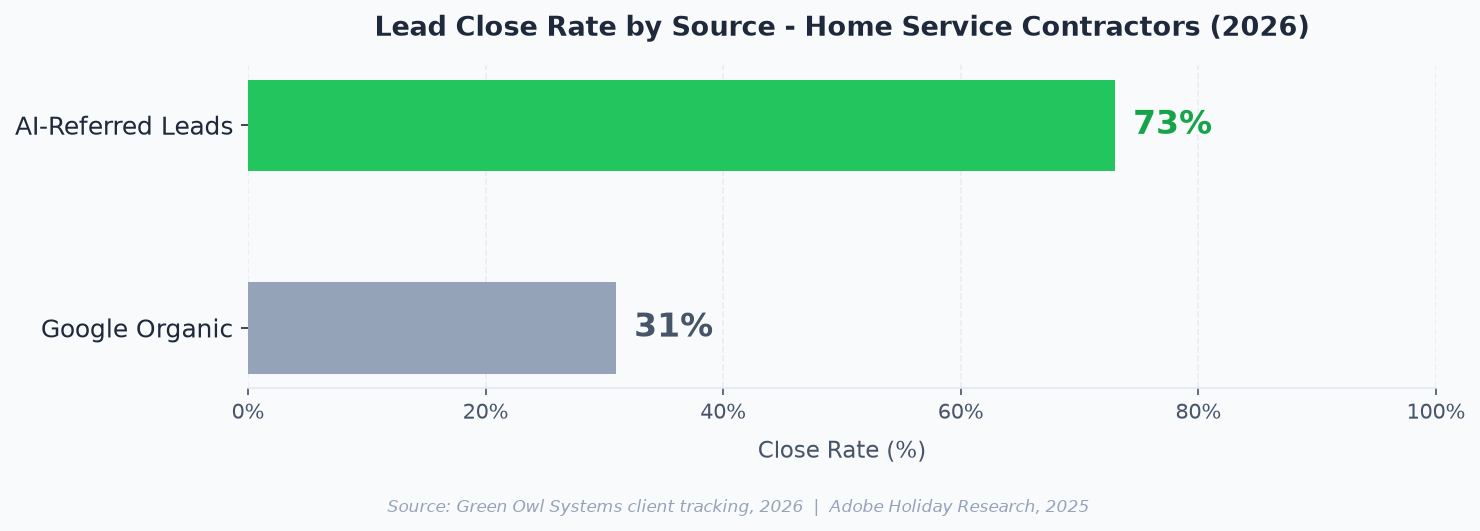
In 2026, AI-referred leads to home service contractors close at 73%, compared to 31% for Google organic leads – based on Green Owl Systems client tracking. The homeowner who found you through an AI recommendation has already received context about your business: your location, your specialties, your reviews. They’re not comparison shopping. They’re calling to book.
That’s consistent with broader market data: Adobe’s 2025 holiday retail research found AI referral traffic converts 31% higher than non-AI traffic and visitors spend 68% more time on-site than traffic from other channels.
Get a free AI visibility audit to see exactly where your business appears – and doesn’t appear – in AI search right now.
Citation capsule: Home service contractors cited in AI search close leads at a 73% rate compared to 31% for Google organic leads, based on Green Owl Systems client tracking (2026). AI-referred homeowners arrive pre-informed about the contractor’s services, location, and reviews, reducing the comparison-shopping step that suppresses conversion rates. Adobe’s 2025 research confirms AI referral traffic converts 31% higher than non-AI traffic across industries.
How to Start Getting Recommended by AI: The First 90 Days
So where do you actually start? The first 90 days are about building the four-factor foundation. Here’s the framework.
Step 1: Claim and Complete Your Entity Signals (Days 1-14)
Your digital identity needs to be consistent, complete, and machine-readable before AI systems can confidently recommend you.
Step 2: Structure Your Website Content for AI Extraction (Days 15-30)
AI systems can only cite what they can clearly read and extract.
Rewrite your service pages to open with a specific, verifiable claim about what you do and where you serve. Not “we’ve been in business since 1998.” Something like: “Smith HVAC provides emergency AC repair and HVAC installation across Phoenix, Tempe, and Scottsdale. Same-day service available. 350+ five-star reviews.”
Add a FAQ section to every service page. Use the exact questions homeowners ask AI – “How much does AC repair cost in Phoenix?” “How long does an HVAC installation take?” “Do you offer financing for new units?” This is the content AI pulls from most readily.
Structure headings hierarchically: H1 for page title, H2 for main sections, H3 for subsections. AI systems use heading structure to understand and extract page content.
Step 3: Build Your Third-Party Citation Footprint (Days 31-60)
Remember – 85% of AI brand mentions come from third-party sources. Your website alone isn’t enough.
Ask every satisfied customer for a Google review. Set up an automated review request (text or email after job completion) with a direct link to your Google review page. Review recency matters as much as volume – 10 new reviews this month outperforms 100 reviews from 18 months ago.
Create or claim profiles on HomeAdvisor, Thumbtack, Houzz, Angi, Yelp, and BBB. Keep them updated with current photos and service descriptions.
Get mentioned in local news, neighborhood platforms like Nextdoor, or contractor association newsletters when possible. Even one local press mention significantly boosts your third-party citation footprint.
Step 4: Create Trade-Specific, Location-Specific Content (Days 61-90)
AI recommendation is driven by whether you have content that directly answers the questions homeowners ask for your specific trade and location.
Publish service + location pages: “AC Repair in Phoenix,” “Furnace Installation in Scottsdale,” “Emergency Plumber in Mesa.” Each page should open with a direct answer to the most common AI query for that service and location combination.
Start a simple blog with monthly posts covering seasonal topics, common homeowner questions, and local context. Document your work with before/after photos and job outcome descriptions – this gives AI systems specific, verifiable content to cite.
Our full GEO service covers all four steps with done-for-you implementation. Questions about the approach? Tyrone Sims runs every audit and strategy session personally.
Citation capsule: The first 90 days of GEO for a home service contractor focus on four areas: completing entity signals (consistent NAP, Google Business Profile, schema markup), restructuring website content for AI extraction (answer-first service pages, FAQ sections), building a third-party citation footprint (reviews, directories, local press), and publishing trade-specific, location-specific content that answers the exact questions AI systems pull from. All four areas must be addressed – on-site optimization alone covers only 15% of what drives AI citation.
Frequently Asked Questions
Is GEO just SEO with a new name?
No. SEO earns you a ranked position in a list of search results. GEO earns you a mention by name inside an AI-generated answer. The tactics overlap – strong entity signals, quality content, and authoritative third-party sources help both – but the goals and platforms are distinct. In 2026, 59.6% of AI citations come from pages outside the top 20 organic results (Omnibound 2026), so you can’t rank your way to AI citation. See the full GEO vs. SEO comparison for contractors.
Does GEO work for small contractors, or only large brands?
GEO actually favors well-defined local entities with strong review profiles – which is exactly what a 5-15 person contractor can build. AI systems don’t recommend the largest company; they recommend the best-documented local answer. A roofing contractor with 80 consistent Google reviews, complete GBP data, and structured service pages will outperform a national franchise with poor entity clarity. See what GEO looks like for your specific trade.
How much does GEO cost for a home service contractor?
Pricing varies by market size and competition. Most contractors see meaningful GEO traction before they’d spend three months of typical Google Ads costs at current CPLs – which WordStream puts at $70.11 average for home services in 2025. The better question is ROI: if AI-referred leads close at 73% vs. 31% for paid leads, the math changes significantly. See our AI visibility service for current pricing.
Will GEO replace my Google Ads or existing SEO?
GEO complements both – it doesn’t replace them. Think of AI citation as a third traffic channel that operates independently of paid search and organic rankings. Given the 12% overlap between AI platforms (MarketingCode 2026), you should optimize for all three surfaces – traditional organic, paid, and AI citation – rather than consolidating into one channel.
What’s the first thing I should do to start GEO?
Get a baseline. Before investing in any optimization, find out where your business currently appears – and doesn’t appear – across ChatGPT, Google AI, and Perplexity. Run the query yourself: ask ChatGPT “who’s the best [trade] company in [your city]?” and see what comes back. If you want a formal audit with recommendations and a prioritized action plan, that’s exactly what our free AI visibility audit covers.
The Window Is Open Right Now
AI search isn’t coming for home service contractors. It’s already here – and 87% of HVAC and plumbing businesses are invisible in it right now.
The shift is measurable and accelerating. In 12 months, consumer AI adoption for local services went from 6% to 45%. One in three homeowners under 45 used AI to find a home service provider in the last 90 days. Those numbers don’t reverse.
Here’s what this means for your business:
- GEO and SEO are different disciplines. A high Google ranking doesn’t mean AI recommends you. Optimize for both separately.
- Four factors determine whether AI cites you: entity authority, citation footprint, content structure, and freshness. Each is buildable in 90 days.
- The window is open right now. GEO takes 4-6 months, and the contractor in your market who starts this month gets cited before competitors who wait until next year.
The homeowner who uses ChatGPT to find an HVAC company next summer is going to get a name. Make sure it’s yours.
Or learn more about our GEO and AI visibility service if you’re ready to start building.
Sources
- 5W PR, AI Visibility Index 2026: Home Services Edition, 2026
- MarketingCode, Consumer AI Adoption for Local Services, May 2026
- Omnibound, AI Search Statistics: 55+ Data Points on GEO, Buyer Behavior, and Citation Rates, February 2026 – https://www.omnibound.ai/blog/ai-search-statistics
- Gartner, Gartner Predicts 25% Drop in Traditional Search Volume by 2026, 2026
- Ahrefs, AI Overviews CTR Impact: Position-One Data Update, 2025
- Adobe, Holiday Season AI Referral Traffic Report, Q4 2025
- WordStream, Home Services and Contractor PPC Benchmarks 2025, 2025
- Green Owl Systems, AI Citation Audit Data: Home Service Contractors, 2026 – internal client tracking